A good aged care facility must offer more than accommodation, meals and a phrase such as “24-hour nursing.” You need to verify the building, staffing, emergency procedures, medication controls and care level against the resident’s actual needs before signing an agreement.
Key takeaways
- Test emergency call buttons from the bed and bathroom.
- Ask for staffing levels, response-time targets and emergency procedures.
- Match nursing, dementia and daily support to the resident’s assessed needs.
- Read medication, infection-control, incident-reporting and cancellation policies before signing.
Inspect the Building for Everyday Safety and Emergency Readiness
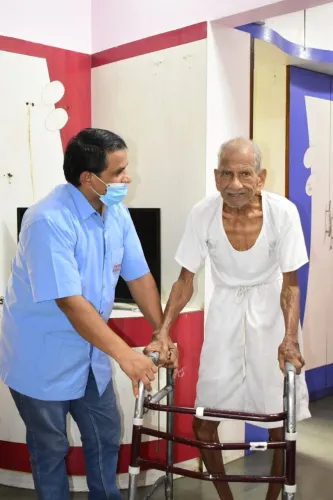
A safe building lets a person using a walker reach the toilet without assistance and lets staff find a bedbound resident during a fire. Test emergency call buttons from the bed and bathroom, then ask who answers and the response-time target.
Check fall detection, reachable handrails, non-slip flooring for seniors' homes, wheelchair-sized bathrooms, grab rails, clear routes, bright lighting, contrasting doorframes, signs, accessible lifts and ramps.
- Ask to see current fire-safety inspection or approval records, smoke-alarm and fire-extinguisher maintenance logs, emergency-light tests and an unobstructed evacuation route.
- Ask which staff member evacuates each bedbound resident or resident with dementia, where evacuation equipment is stored, and whether drills include dependent residents rather than only walking adults.
- Ask whether backup power runs nurse-call systems, fire alarms, lifts needed for evacuation, oxygen, medicine refrigeration, water pumps and communication systems. Ask how the facility handles Pune power cuts, heavy monsoon conditions and lift failure.
| Feature | Inspect | Failure sign |
|---|---|---|
| Emergency access | Call buttons, fall detection and lift alarms work during testing | No answer, dead battery or no alternative route |
| Movement safety | Rails are reachable; floors are dry and non-slip; ramps and lifts accept wheelchairs | Loose rails, glare, clutter or steep thresholds |
| Fire readiness | Alarms, extinguishers, lighting, assignments and inclusive drills are documented | Expired records or no named evacuation assistance |
| Cognitive safety | High-contrast signs and simple routes guide residents | Identical doors, confusing corridors or locked escape paths |
Verify Staffing, Emergency Response and Healthcare Coordination
A promise of 24-hour nursing means staff are physically present at every hour, with defined coverage rather than a phone number. Ask for the following before admission:
1. A written nurse-to-resident coverage plan for every shift, including overnight nursing staff. Confirm attendant duties, nurse qualifications, registration details, background checks, doctor availability and written handover procedures. Ask who checks residents during night rounds and who replaces absent staff.
2. A hospital transfer procedure covering falls, acute confusion, breathing difficulty, chest pain and suspected stroke. It must name the 2 a.m. decision-maker, ambulance-call target, first-aid capability, ambulance access route, receiving hospital and person responsible for contacting family.
A hospital tie-up is only a relationship; it is not proof of rapid transfer, clinical information sharing or acceptance of the resident.
3. Request the healthcare roster and mark each service as employed, contracted or referral-only: geriatric physician visits, nursing reviews, physiotherapy, occupational therapy, diagnostic testing, specialist appointments, chronic-disease monitoring, mental-health support, dietetics, speech-and-swallow therapy and dentistry. Ask how quickly each service can be arranged, who orders tests, who receives results and where follow-up is recorded.
A facility that cannot show shift coverage, escalation records and named clinical responsibility is asking you to trust a slogan. Insist on seeing sample observation charts, transfer forms and handover records with personal details removed.
Match the Resident’s Needs to the Right Level of Care
A placement decision starts with function, not the building’s brochure. Record the resident’s diagnoses, consent capacity, advance-care preferences and care limits before admission, then reassess after a fall, infection, hospital visit or major functional change.
- Walking: note walking distance, walking aids, gait and balance, previous falls, footwear and blood-pressure changes.
- Transfers: record whether the resident needs supervision, one-person help or two-person transfers; complex transfers can exceed assisted-living capacity.
- Continence: document toileting ability, continence products and whether night-time assistance is required.
- Medicines: list every medicine, who administers it, and whether missed doses or adverse reactions need clinical oversight.
- Cognition and behaviour: record memory, decision-making, wandering, agitation, aggression, sleep disturbance and other behavioural symptoms.
- Sensory impairment: note vision, hearing, communication needs and access to glasses or hearing aids.
- Nutrition: assess appetite, weight change, swallowing, dehydration risk and required diet.
- Skin and pain: check pressure-injury risk, existing wounds, skin integrity, pain location and pain-control needs.
Assisted living versus nursing care depends on clinical workload: assisted living is unsuitable for continuous monitoring, complex transfers or hospital-level treatment. A dementia care facility needs secure supervision and trained behaviour support, not simply locked doors. Rehabilitation for older adults is time-limited and goal-based, with measurable targets; it is not indefinite residential care.
Acute deterioration—such as breathing difficulty, chest pain, suspected stroke or sudden severe confusion—belongs in hospital care, while a skilled nursing facility suits ongoing post-acute clinical care beyond ordinary residential support. Confirm who makes transfer decisions and updates the family.
Check Dementia, Medication, Nutrition and Infection Controls
A dementia care plan must record triggers, communication preferences, sleep, eating, toileting, wandering risk and past behaviour. Check for secure exits, door alarms, identification systems, structured routines, environmental cues and dementia-trained staff. Sudden confusion needs assessment for delirium, infection, dehydration or another illness—not automatic sedation or restraint.
Ask the facility to show or explain:
- Whether staff administer medicines or only remind residents, and who is legally responsible for each task.
- Where prescriptions are securely stored, where the signed administration record is kept, and how missed doses, adverse reactions and insulin administration are documented.
- When medicines are reconciled after admission and every hospital discharge, then reviewed for falls or confusion risk.
- How menus accommodate diabetes, renal and cardiac diets, poor appetite, culturally familiar food and swallowing difficulty in elderly residents; ask how staff monitor intake, weight loss and dehydration and obtain speech-and-swallow referral after coughing or choking.
- Whether written procedures cover hand hygiene, shared-equipment cleaning, waste disposal and laundry, and how influenza-like illness, gastroenteritis or COVID-19 trigger outbreak control, isolation or cohorting.
- How staff maintain meaningful contact during infection precautions instead of leaving residents isolated without review.
A facility that cannot produce these records relies on promises rather than safeguards. Ask how frequently staff receive dementia, medication, insulin, nutrition and infection-control training, and who audits compliance.
Use Records, Policies and the Contract to Test Care Quality
Before choosing, use an aged care facility inspection checklist that tests records, not brochures. Request fall and near-miss logs, cause investigations, resulting changes, updated care plans, meaningful family communication, complaint and abuse-reporting channels, and protection from retaliation.
- Ask for policies on visitor and staff identification, theft safeguards, photograph consent, locked doors, bed rails, sedating medicines, and private conversations with family or advocates.
- Check that resident rights in care homes include confidential complaints, independent investigation, and access to an outside representative.
Compare promises with evidence:
| Promise | Evidence to request |
|---|---|
| 24-hour safety | Overnight staff, escalation records, ambulance procedure and receiving hospital |
| Personalised care | Current care plan, medicine administration record and updates after falls, infections or hospital visits |
| Family involvement | Named contact, update schedule and documented calls, not only invoices |
| Abuse prevention | Incident reports, investigation outcomes and non-retaliation procedure |
Require the contract to separate accommodation, clinical and personal-care charges. Itemise medicines, diapers, doctor visits, ambulance transfers, physiotherapy, investigations, hospitalisation, special diets, oxygen, one-to-one attendants, deposits, refunds, and annual increases. State what happens when care needs increase; a low fee can conceal expensive extras.
End-of-life care planning belongs in the admission file: record the consent authority, treatment preferences, legally applicable resuscitation decisions, preferred hospital, family contacts and palliative-care access. A family comparing Pune facilities, including Swarnanagari Old Age Homes 9765119625, can use these documents during a site visit rather than trusting a nominal hospital tie-up.
Related products
 | Old Age Care Assisted living facilities offer supportive housing for older adults who are mostly independent and active but may need some help with daily tasks. View product → |
 | Old Age Care Our retirement homes offer more than just a place to live—they provide a supportive environment that combines healthcare, psychological support, and... View product → |
Frequently asked questions
What building safety features should you test at an aged care facility?
Test emergency call buttons from the bed and bathroom, check walker access to toilets, inspect handrails and lighting, and ask how staff locate bedbound residents during a fire.
What should you ask about staffing and emergency response?
Ask who answers emergency calls, the response-time target, overnight staffing levels, escalation procedures and how the facility coordinates with hospitals, doctors and family members.
How do you choose the right level of aged care?
Match the resident’s mobility, continence, personal-care, nursing, medication, dementia and medical needs to the support the facility provides every day.
Which care controls should you verify before admission?
Check dementia safeguards, medication administration and storage, nutrition and hydration monitoring, infection-control procedures, incident reporting and records of care.
Which documents should you read before signing an aged care contract?
Read the care plan process, fee schedule, staffing and service commitments, complaint procedure, incident policy, visitor rules, discharge terms and cancellation conditions.
Related products
 | Old Age Care Facilities within Charges: 24hrs Nursing 24hrs Attended Service Housekeeping and Laundry Breakfast, Tea, Lunch, High Tea, Snacks, Dinner... View product → |
 | Old Age Care Dementia is not a single, specific illness but a broad term used to describe a range of symptoms that affect memory, thinking, and social abilities... View product → |